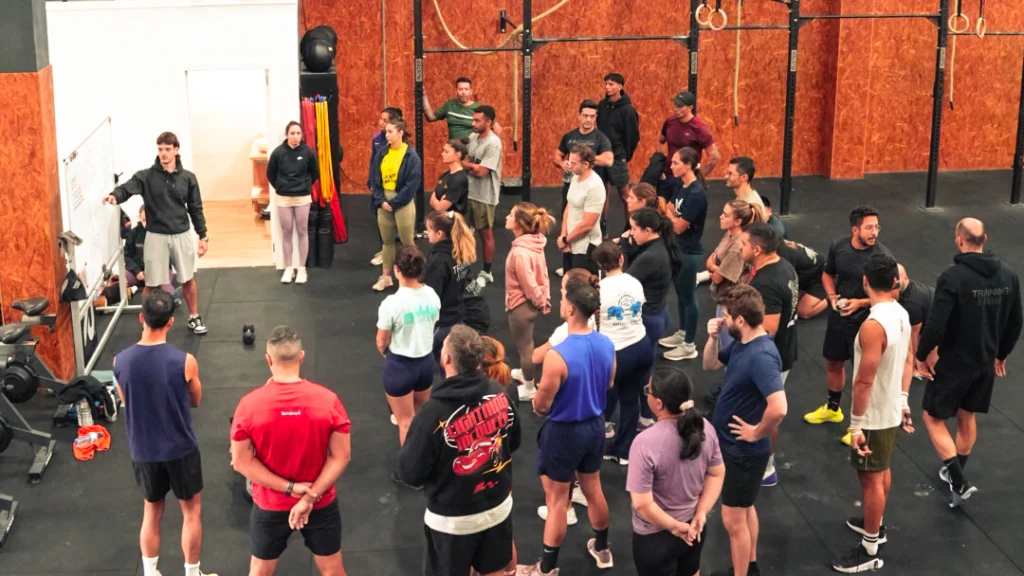
For CrossTraining you need technical clothing that doesn’t hold you back (a breathable T-shirt plus leggings or shorts) and stable, flat-soled trainers. That’s enough for any class. Everything else depends on the type of class and how long you’ve been training.
The basic rule: it has to let you move
In a single CrossTraining session you might do deep squats, hang from a bar, skip rope and go upside down. Before you leave home, do a squat and lift your arms overhead: if your clothes pull, slide down or ride up, they’re not the right ones for training.
- Top: a breathable technical T-shirt or top. Fitted or mid-length is best, so it doesn’t fall over your face when you do a handstand or a roll.
- Bottom: long or short leggings, or shorts that don’t ride up when you squat. Avoid pockets with things in them and long dangling drawstrings.
- Fabric: technical rather than cotton, which gets heavy once it’s soaked with sweat.
Trainers: the most important thing
If you only invest in one thing, make it your trainers. Lifting weights calls for a firm, fairly flat sole that doesn’t sink: in very cushioned running shoes your foot wobbles when you load a barbell or do jumps and changes of direction.
- To start with: any stable gym trainer with little cushioning will do. You don’t need to buy anything special for your first class.
- If you train several times a week: cross-training shoes (sold as “training” or “CrossFit” shoes) are the middle ground: stable for lifting and comfortable for short runs.
- Weightlifting shoes (with a rigid heel): only if you ever specialise in barbell technique. You don’t need them to start.
What changes from class to class
- WOD: the basic combination above. It’s the class with the widest range of movements, so comfort comes first.
- Weightlifting and barbell strength: long leggings or high socks, so the bar doesn’t scrape your shins in deadlifts or cleans. Olympic weightlifting is trained inside the WOD.
- Gymnastics: a fitted or tucked-in T-shirt for handstands and pull-ups, and high socks or long leggings if there are rope climbs.
- Hybrid: there’s running, so trainers with a bit more cushioning than for the WOD work better, without going as far as very soft running shoes. In winter, add a light layer for the running sections.
For women and men
The same principles apply, with a couple of details. If you are a woman, wear a high-support sports bra: you’ll notice it in jumps, skipping and burpees. High-waisted leggings don’t slide down in squats. If you prefer shorts, go for ones with a built-in liner or wear short leggings underneath, so you’re comfortable squatting and upside down.
Accessories: what you need and what you don’t
- From day one: a water bottle and a small towel.
- Once you hang from the bar regularly: hand grips, so your hands don’t tear on pull-ups and toes to bar.
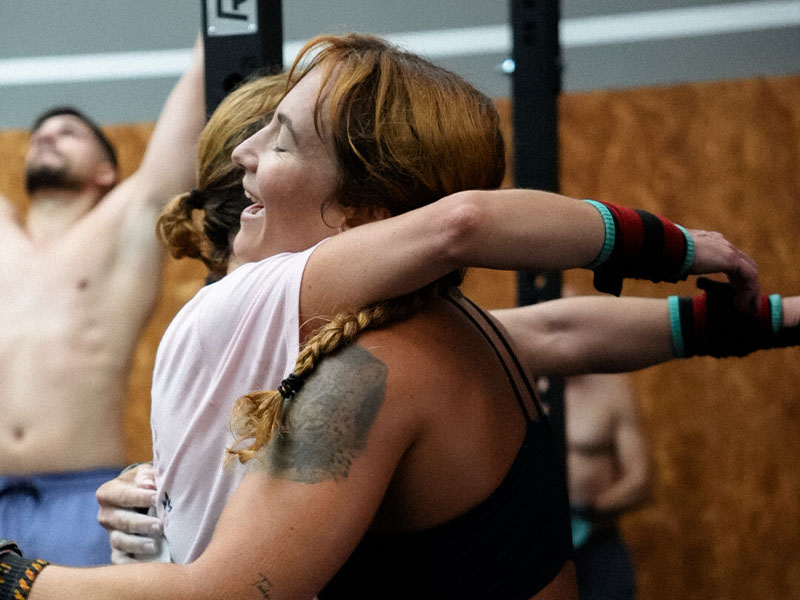
- Optional: wrist wraps for overhead lifts, and your own jump rope if you want to practise double unders at home.
- Not needed: a lifting belt or knee sleeves to start with. We have all the training equipment at the box, as we explain in what to bring to your first class.
The best training clothes are the ones you forget you’re wearing: if you’re thinking about them during the WOD, they’re not the right ones.
The box’s own kit
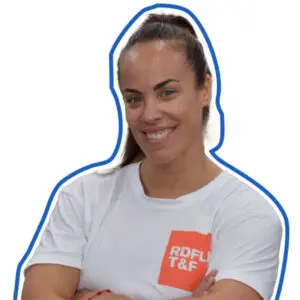
At Redfield Drops (in Spanish and Catalan) we release T-shirts, hoodies and trousers with the box’s designs, plus gear such as hand grips, jump ropes and wrist wraps. You order online and pick them up at reception, paying at the box or with your membership.
Haven’t trained with us yet? Comfortable clothes and stable trainers are all you need: book your free class at Redfield T&F.